Tips and Tales from a Macho Chegan: My Misgivings with the Environmental & Vegan Movements
For those interested in making a change, I thought I'd share a few of my misgivings with the environmental/vegan movement, and a few tips on how to move towards a less animal-intensive diet.
Most of my life I've eaten like your typical jockish, macho dude--tons of red meat and proud of it. However, about six months ago my girlfriend began to push me on the ethical inconsistency of eating truckloads of meat and dairy while also believing that we should do our best to conserve water, reduce our carbon footprint, and reduce the suffering of non-human species. Much to my astonishment, six months later I am a non-strict vegan (chegan is a term used for vegans who "cheat" occasionally and eat animal products) and feel totally healthy (and even a bit less lethargic after meals). For those interested in making a change, I thought I'd share a few of my misgivings with the environmental/vegan movement, and a few tips on how to move towards a less animal-intensive diet. Not to suggest that I'm some kind of authority or expert on the subject, just that I'm your typical dude who has always loved a nice steak and physical competition, not the effeminate/hippy/tree hugging wimp that most people think of when they think of vegan dudes. Anyway, on with it.
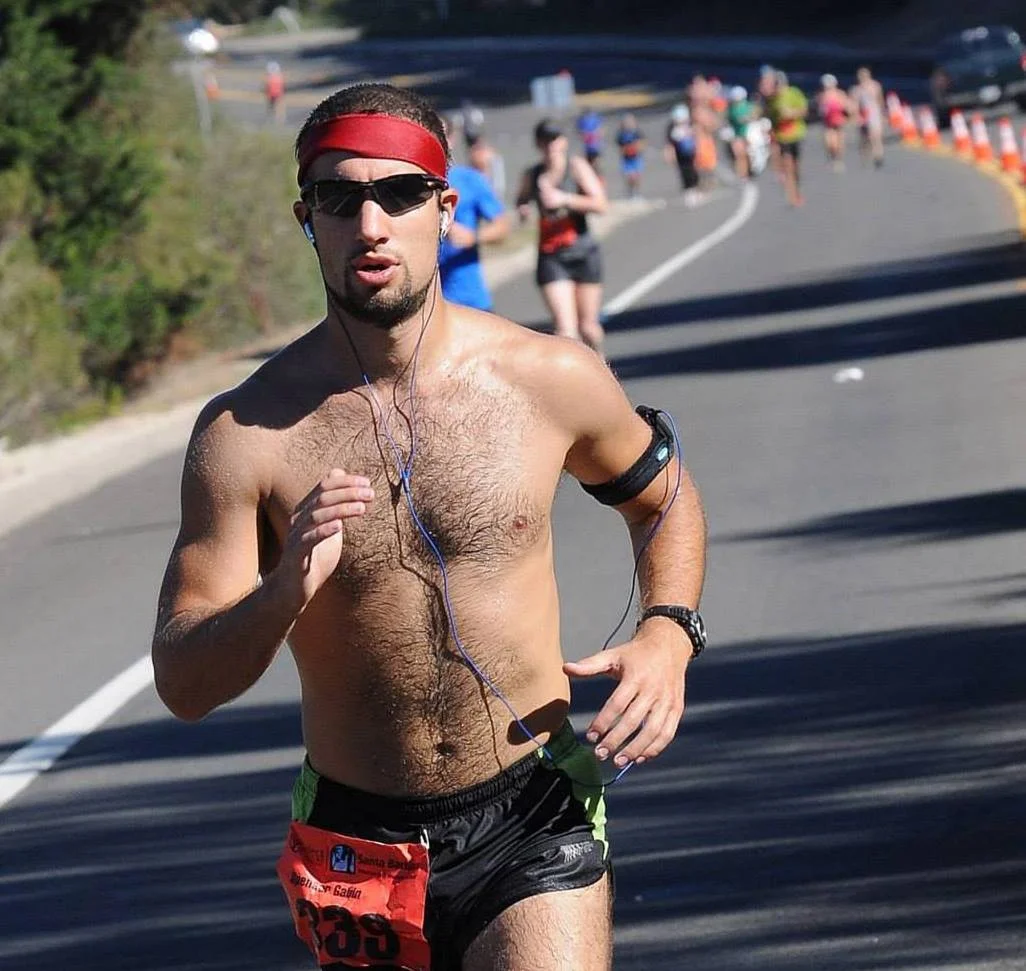
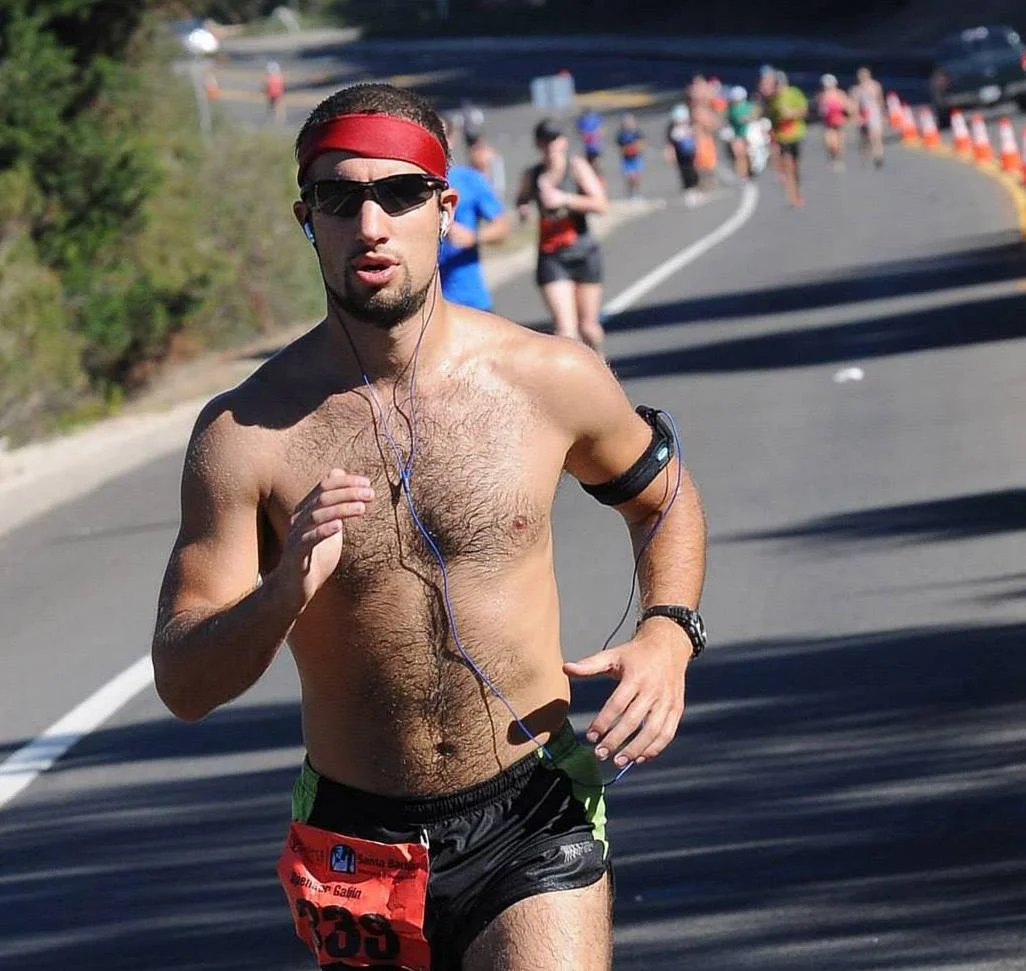
At the 2014 SB Marathon, you can totally see how macho and self-serious I am about the whole thing
While many people think the choice to become vegan almost always comes from some empathetic connection with animals and animal cruelty, and that certainly is the main motivator for many people (definitely a significant motivator for myself), but veganism has a huge environmental impact we often don't address. Often, the scale of the impact our activities and choices have on the environment is radically misguided. For example, living in Santa Barbara, I frequently receive mailers urging me to fight the drought by agonizing over my shower time. In reality, when looking an how we actually consume water, this is almost laughable compared to other changes we could make, like consuming less meat. Animal agriculture accounts for about 50% of water usage in California and non-industrial use accounts for only 4%.
The (often willful) ignorance of animal agriculture's impact on the environment is hugely problematic, and the undue attention paid to negligible contributors surely results in moral licensing. Most of the major environmental organization's websites omit all mention of animal agriculture, while focusing on ridiculous hand-wringing about driving to the farmer's market and unplugging your microwave when it's not in use. Yet, even the most conservative estimates say animal agriculture is responsible for ~10% of all GHG emissions, with some putting it at over 50% of emissions (my inkling is that the number probably falls somewhere between the two estimates). But regardless of the precise number, it's a significant contributor and it's something most of us (especially in the U.S.) are promoting in our everyday lives."
Now I know what you're thinking, here comes my guilt-inducing plea for you to see the error of your ways and become a vegan this very minute. Although that seems to be a common strategy amongst vegans, I believe it is likely a poor one, and far more likely to cast vegans as pushy extremists than actually get anyone to change their behavior. Research would suggest that asking for something far smaller first will have much more success , but unfortunately, I've found that many vegans are more concerned with moral grandstanding than actual outcomes (see video on the right), as if any kind of compromise is a reproachable moral failing. Instead of trying to make you feel guilty, I'll say that heavily reducing my consumption of animal products has added to my self-esteem, in that I'm using discipline to try and live out my moral values.
If you do feel motivated to make a dietary change in view of these statistics, I'd suggest starting with something modest. Maybe reduce your meat consumption by 20%, or cut only beef (which causes the highest level of emissions and uses the most water), I suspect you'll find that it's easier than you think (at first, I thought I didn't stand a chance of ever being anything close to vegan). One strategy is to substitute the surprisingly delicious Beyond Meat or Sweet Earth for your meat once a week. Yes, they're actually tasty and quite convincing when mixed into pasta or rice & veggies. Daiya is awesome vegan cheese when you melt it into a burrito or burger. Also to my surprise, I've found soy milk to actually be tastier than cow's milk.
I'd also recommend trying to cook at home more rather than going out, as I found that putting myself in social situations without vegan food was the most common way I would cave (which I of course still do). My girlfriend got me into using a vegan cookbook, which helped to make the change seem like more of an exploration than an ascetic deprivation.
Most of all, I'd say to take it slow and remember that you are looking for a sustainable, long-term change, not just a flash in the pan diet. Vegan recidivism rates are high, and not everyone can maintain the diet without serious nutritional deficiencies, perhaps making animal products a necessary evil for many people. So take it easy, and congratulate yourself on every small step that you take.
Chomsky on the Extravaganza of the Election Cycle
Great analysis that goes outside mainstream commentary.
Project Nuevo Mundo
I had the pleasure to film David Casey's workshop on Project Nuevo Mundo at the Lucidity Festival this year. David has created a great website called NuMundo.org that's awesome to dig into if you're interested in volunteering/working in South America and want to verify what you'll really be getting yourself into before heading off. Also, I really recommend watching David Casey's full workshop at Lucidity Festival if you want to learn practical tips on volunteering or brining a vision to life, including pitfalls to avoid and stories of success. You can watch the full workshop here: vimeo.com/spensergabin/numundo
AIDS/Lifecycle
This spring I participated in AIDS/Lifecycle, a 545 mile bike ride from San Francisco to Los Angeles. I arrived in Los Angeles last Saturday and I wanted to send a quick message (and video) highlighting how much I enjoyed and learned from this experience.
The event was extremely well-run and I felt taken care of and supported the whole way. With the small exception of a little inner knee pain on Day 2 and 3, my body felt good the entire time, and I was even able to get a free message about halfway through the ride!
The largest takeaway from me from the ride was just the stunning example of a community coming together to rally around a cause. I have done quite a few runs for different charities and events, but this was the best example I've ever seen of a well-organized and effective event. People maintained their passion and good spirits even while climbing up tough hills or battling rain and cold winds. The rest stops and food provided were outstanding and were probably the biggest thing that kept me from hitting the dreaded bonk.
There are a lot of problems in the world and reasons to feel cynical, but this was an authentic example of a good reason for hope. The ride was able to raise over 16 million dollars this year and that number is only likely to grow. I suspect one reason they are able to raise so much is because they treat their riders so well and they want to come back year after year, raising more each time. Although I haven't yet decided if I'll be riding again, I can definitely say that I absolutely would based on the quality of the event. AIDS/Lifecycle presents a shining example of how to build a community around a common goal and I hope that's something I'll be able to apply to future endeavors.
None of the lessons I learned, the people I met, the beauty I experienced, none of it would have happened without the support of my donors. AIDS/Lifecycle has given me tangible reasons to believe there is hope for the world and that we can change the world when we organize and come together.